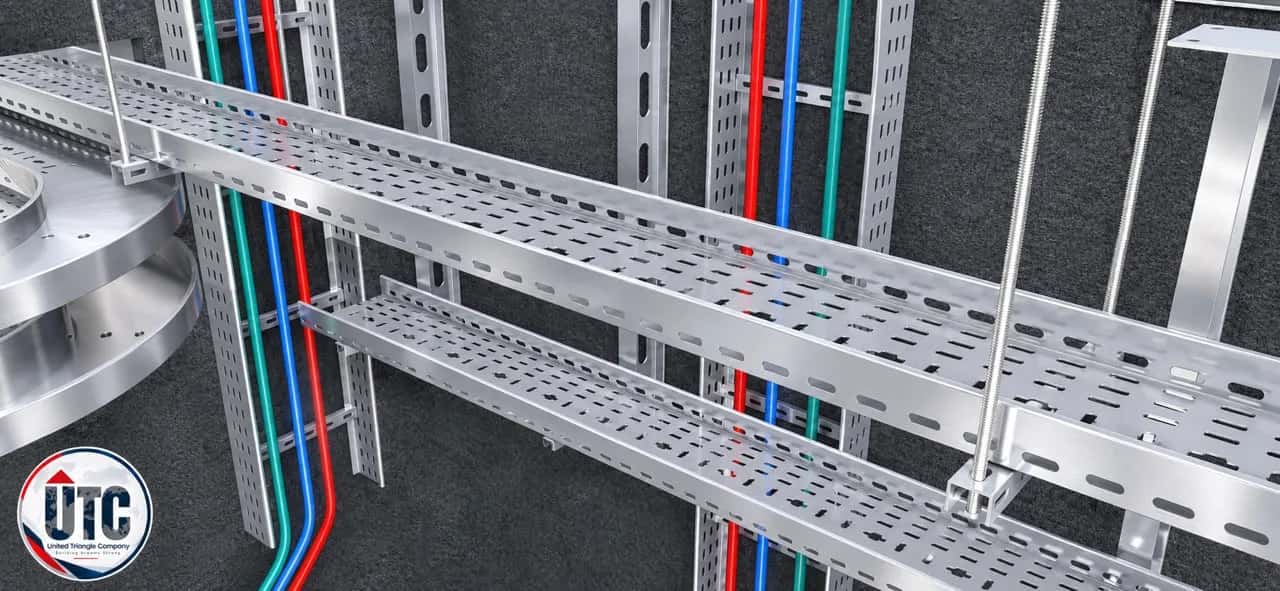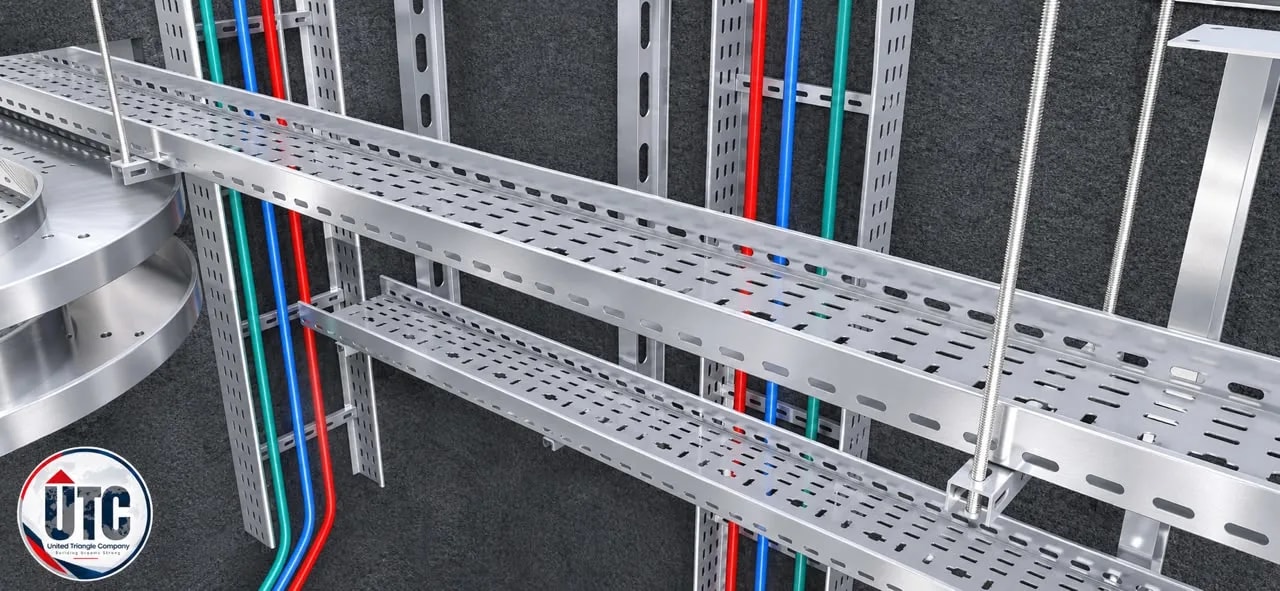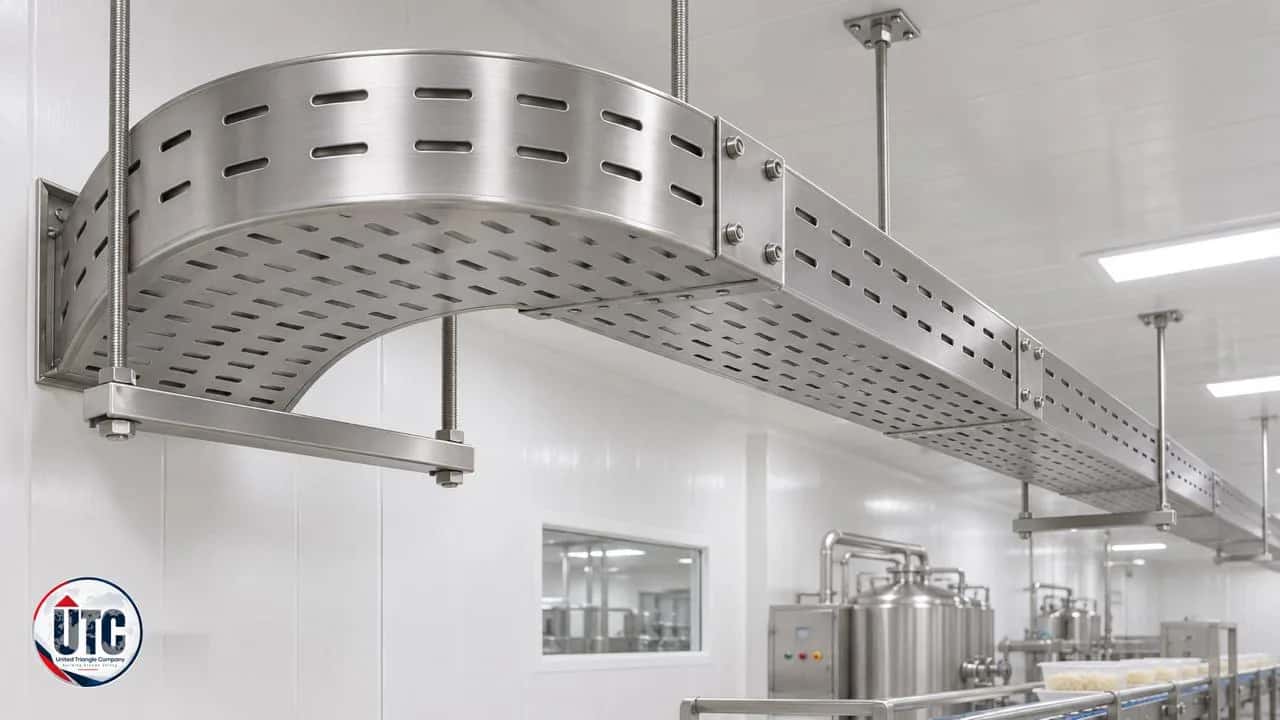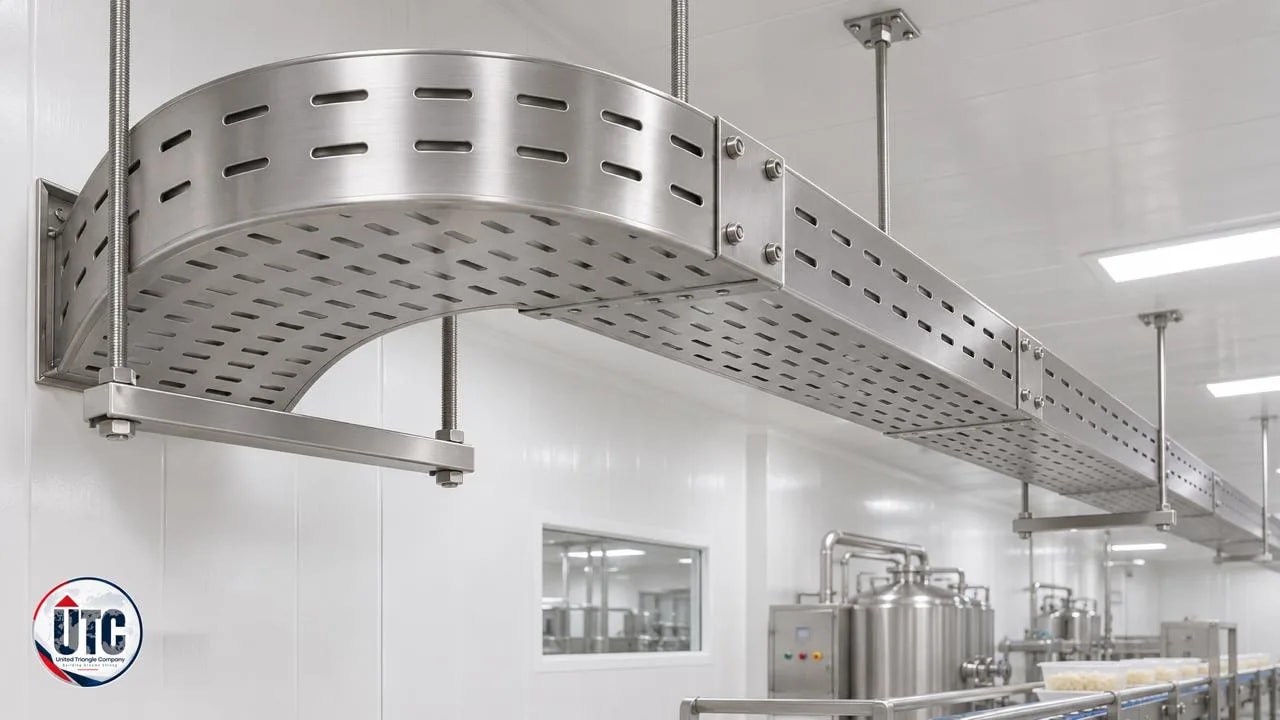

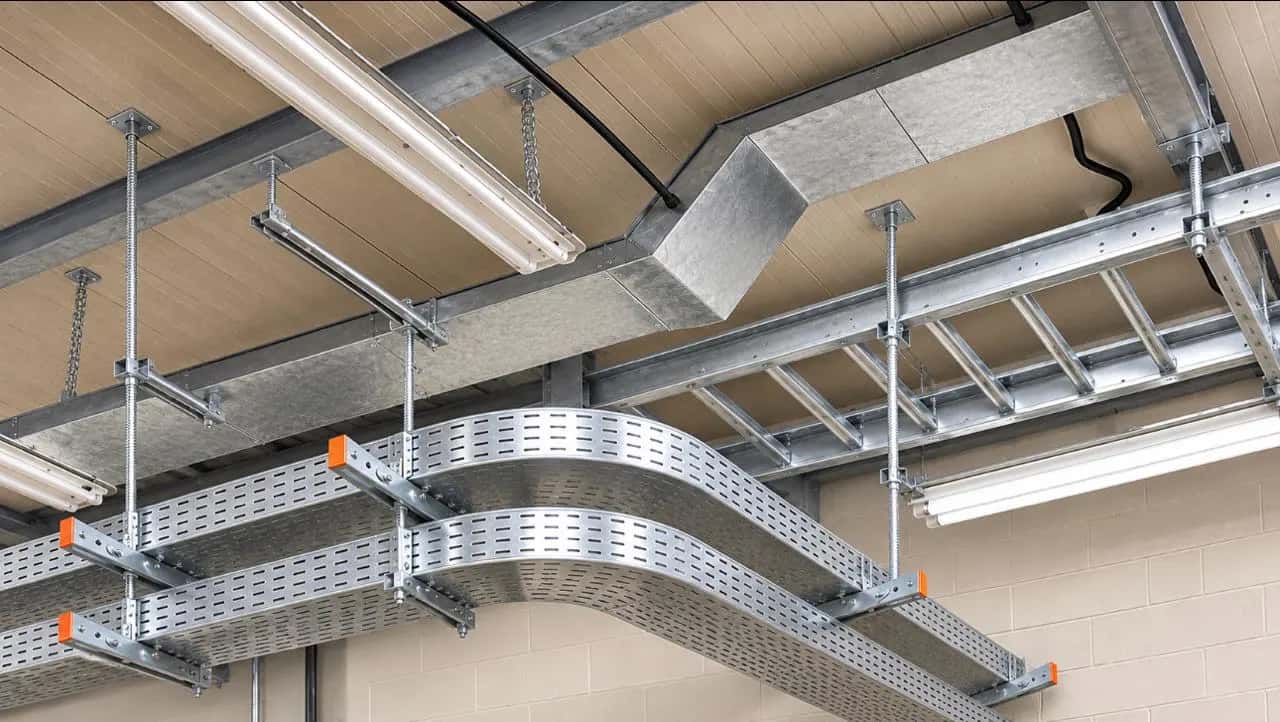
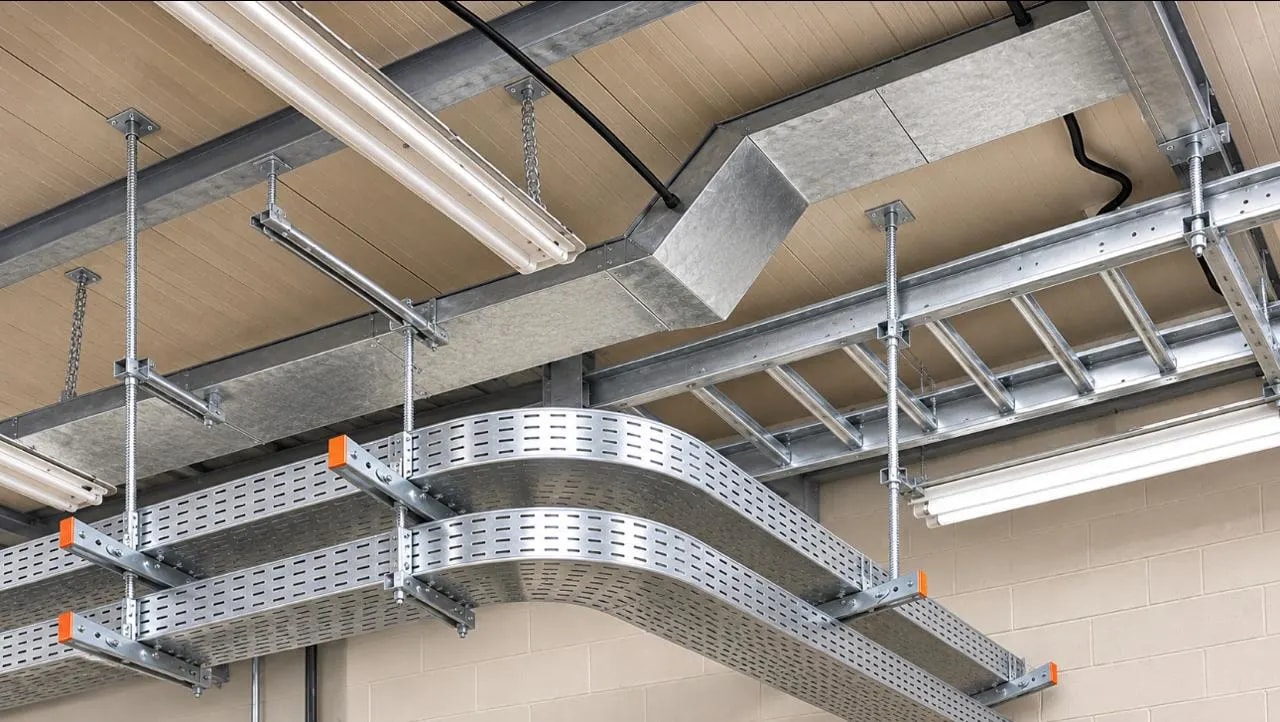
Cable trays and cable ladders do the same basic job — they support and route cables through a building or plant. The difference is in how they are built, and that decides where each one performs best.
How they are built
A cable tray is a one-piece fabricated channel: a base and two side walls formed from sheet steel, perforated on the sides and bottom so the cables can breathe. The continuous base gives small and flexible cables support along their whole length.
A cable ladder is made of two side rails joined by rungs at regular intervals. There is no solid base — cables rest on the rungs, which leaves the run open for airflow and makes it easy to tie heavy cables down at any point.
When a cable tray is the better choice
- Light to medium loads — lighting, small power, data and instrumentation cables.
- Small or flexible cables that would sag between ladder rungs.
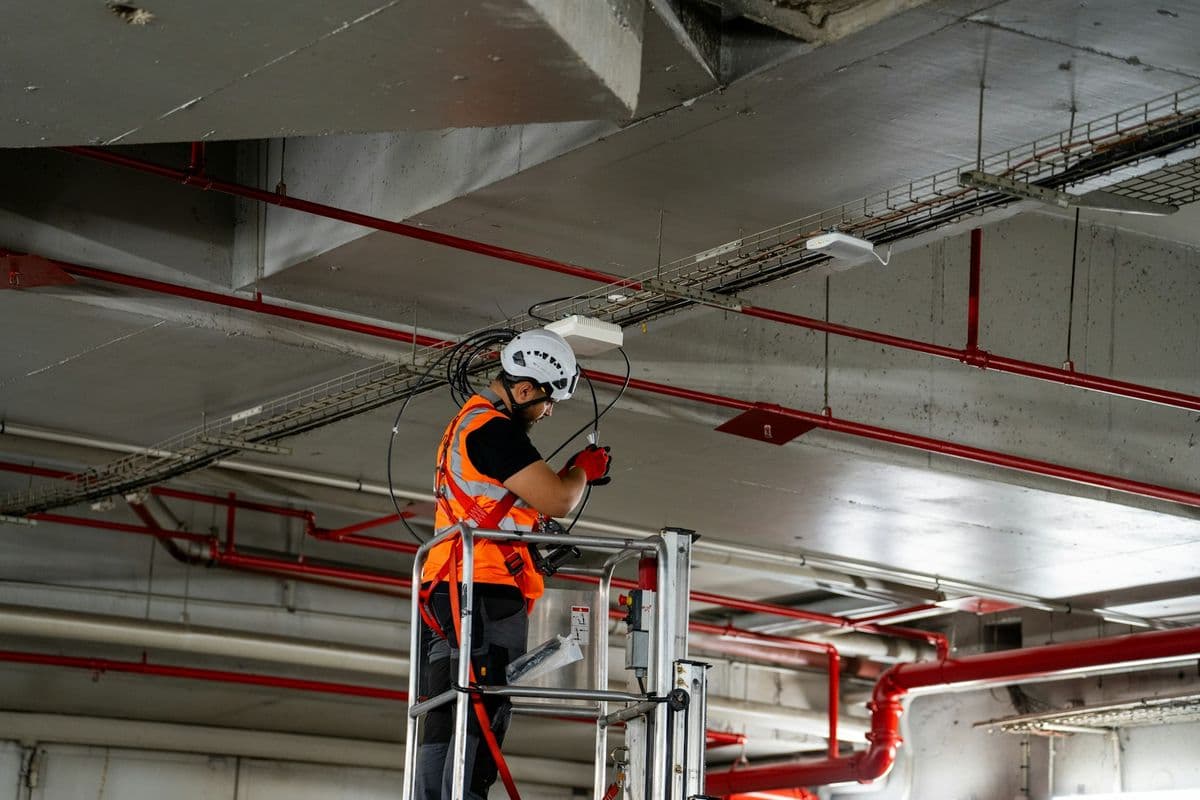
- Commercial buildings, where runs sit above ceilings and in risers and spans between supports are short.
- Tidy, compact routes where a neat appearance matters.
When a cable ladder is the better choice
- Heavy power cables and large bundles, where load capacity is the priority.
- Long spans between supports — the side rails resist bending and deflection.
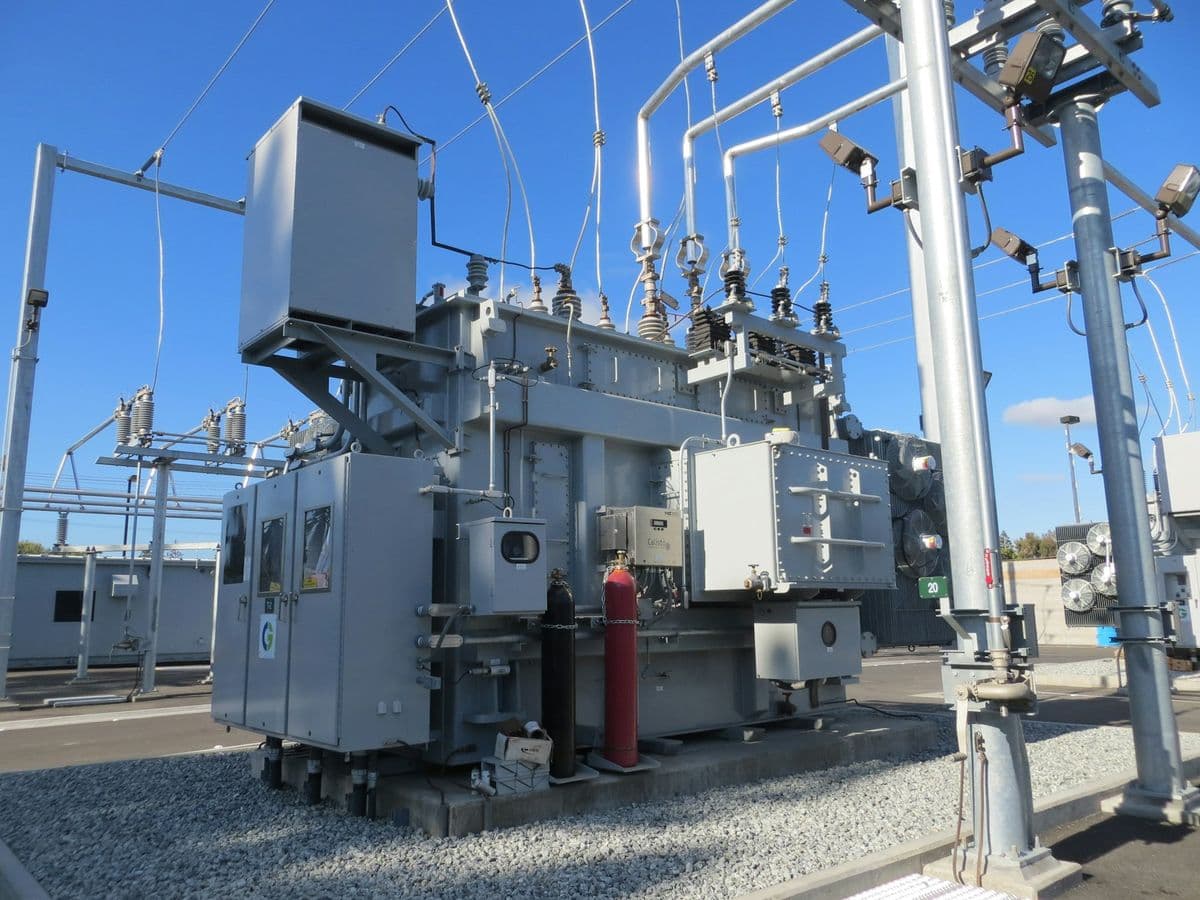
- Industrial plants, substations and utilities, where cables run in quantity across open structures.
- Maximum ventilation, because heat escapes freely between the rungs.
Questions to answer before you specify
- What is the cable load per metre — today and after future expansion?
- How far apart will the supports be? Longer spans need a stronger section.
- What is the environment? Indoor, outdoor, coastal or chemical exposure decides the finish.
- Which fittings will the route need? Bends, tees, risers and reducers should come from the same system.
- Which standard does the project call for? UTC trays and ladders are made to BS EN 61537 and NEMA VE-1.
Not sure? Send us the cable schedule and the route. Our engineers will recommend the system, size and finish — and design custom fittings where a standard part won't do.
The short version
Choose a tray for lighter loads, smaller cables and short spans; choose a ladder for heavy cables, long spans and industrial routes. Many projects use both: ladders on the main routes and trays on the branches.
Planning a project?
Send us your requirements — we’ll recommend the system and quote.