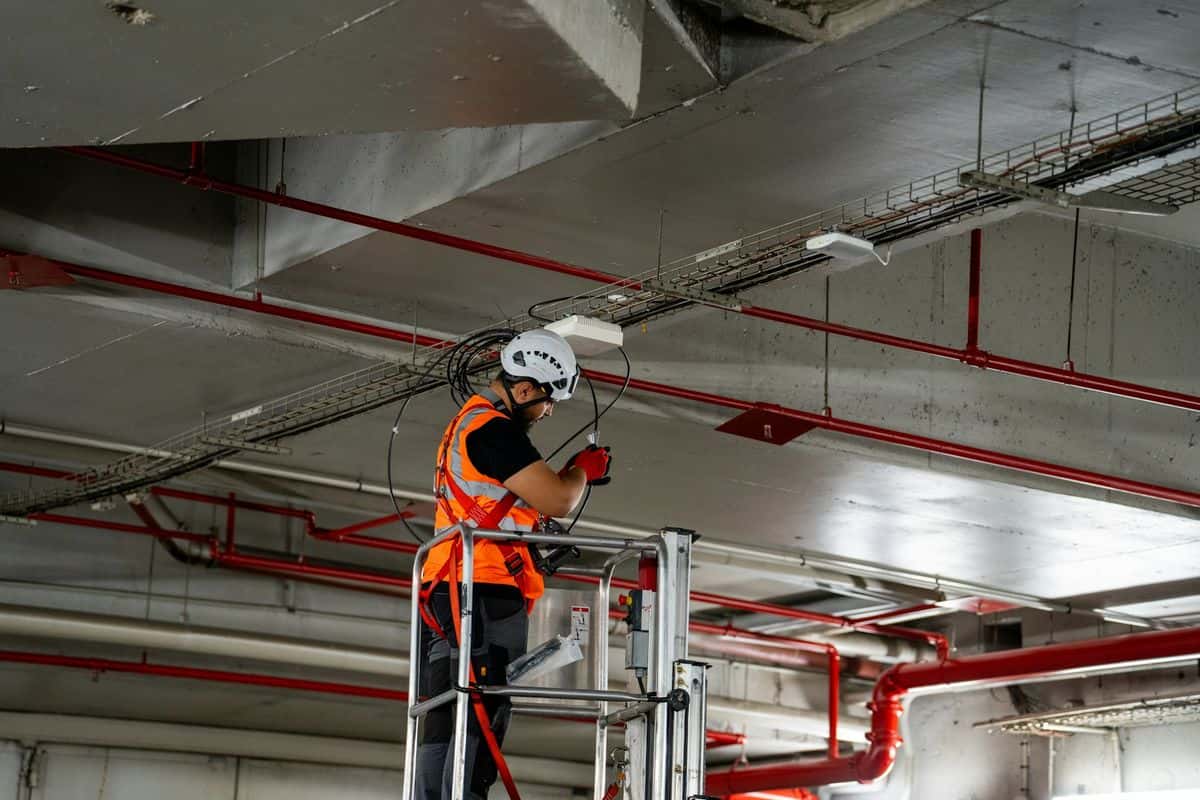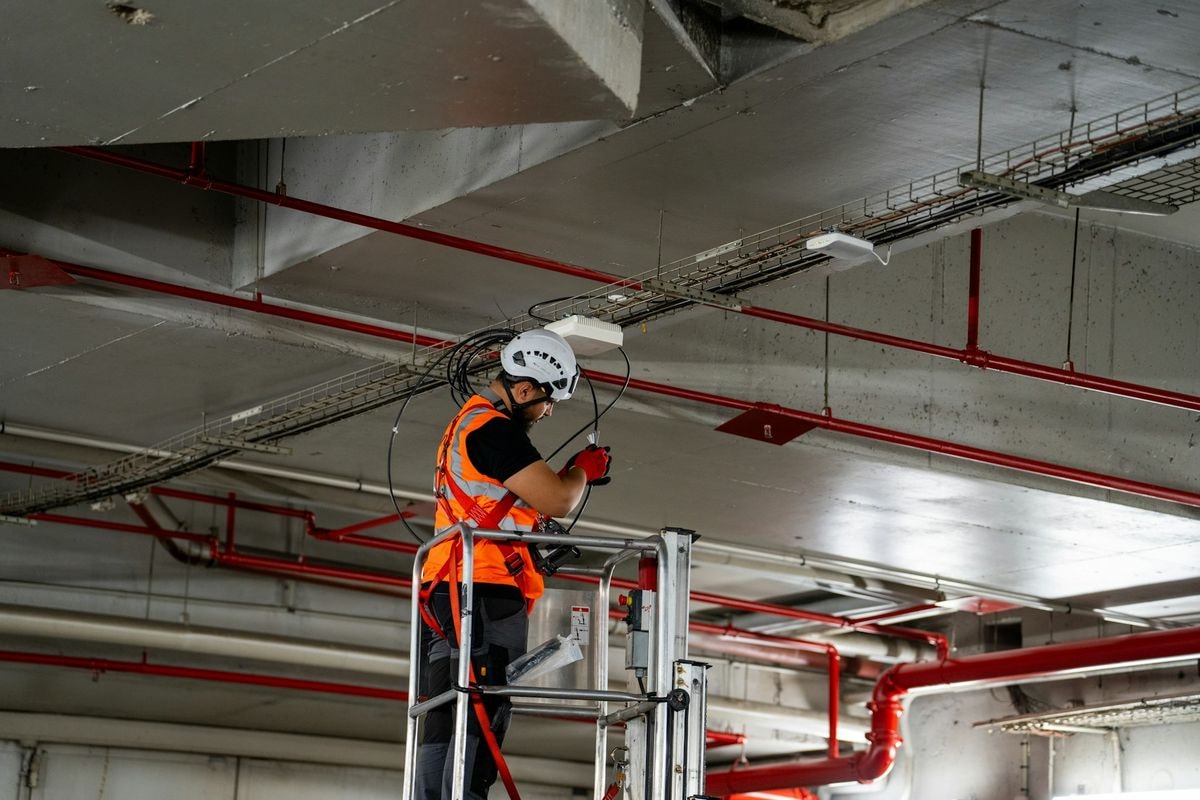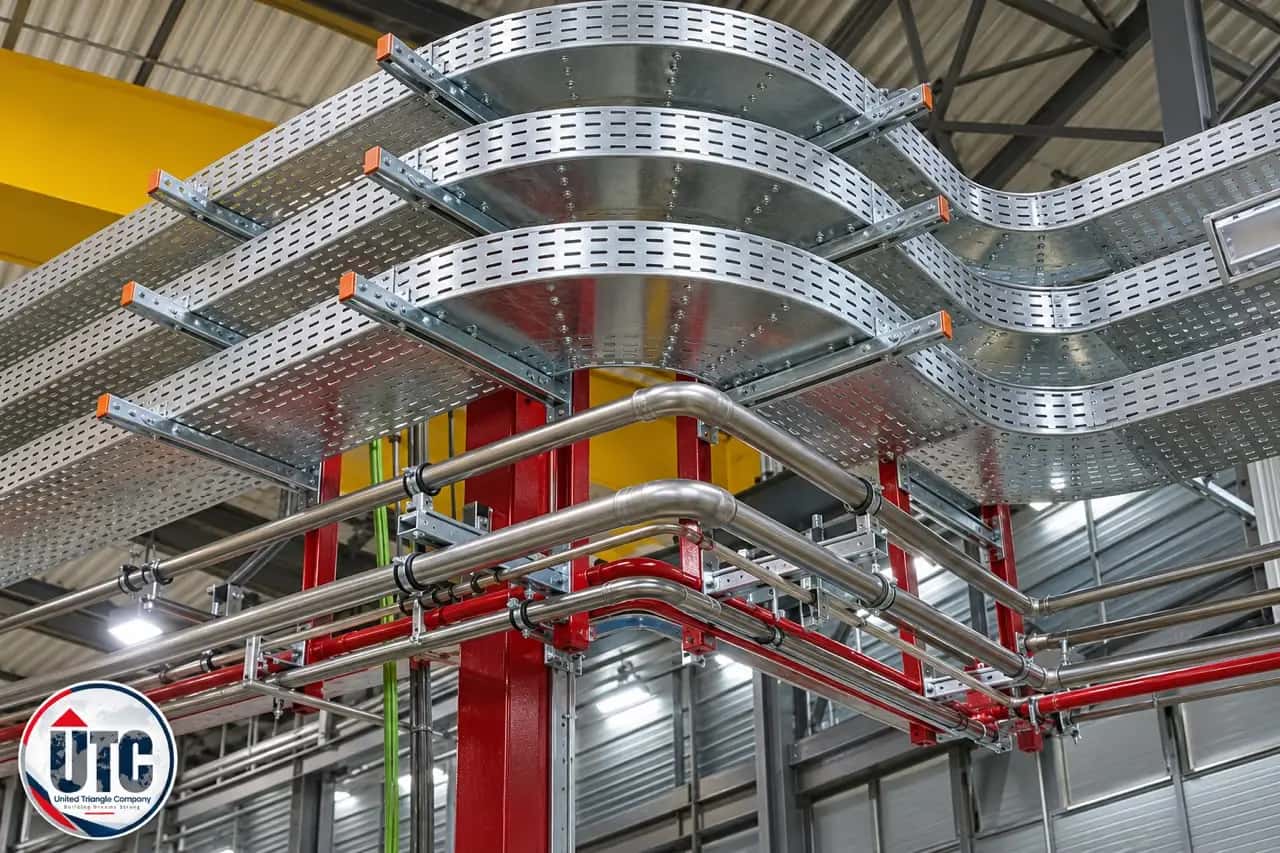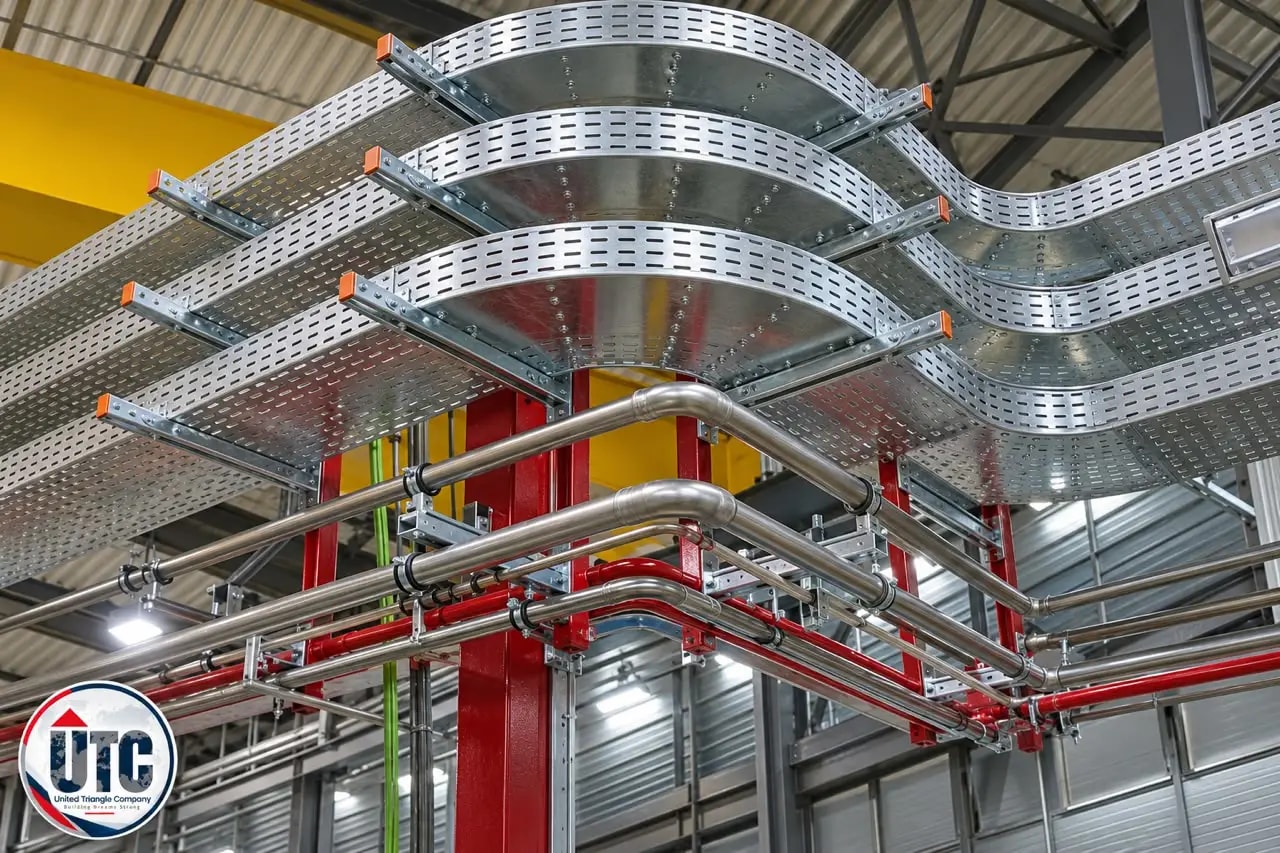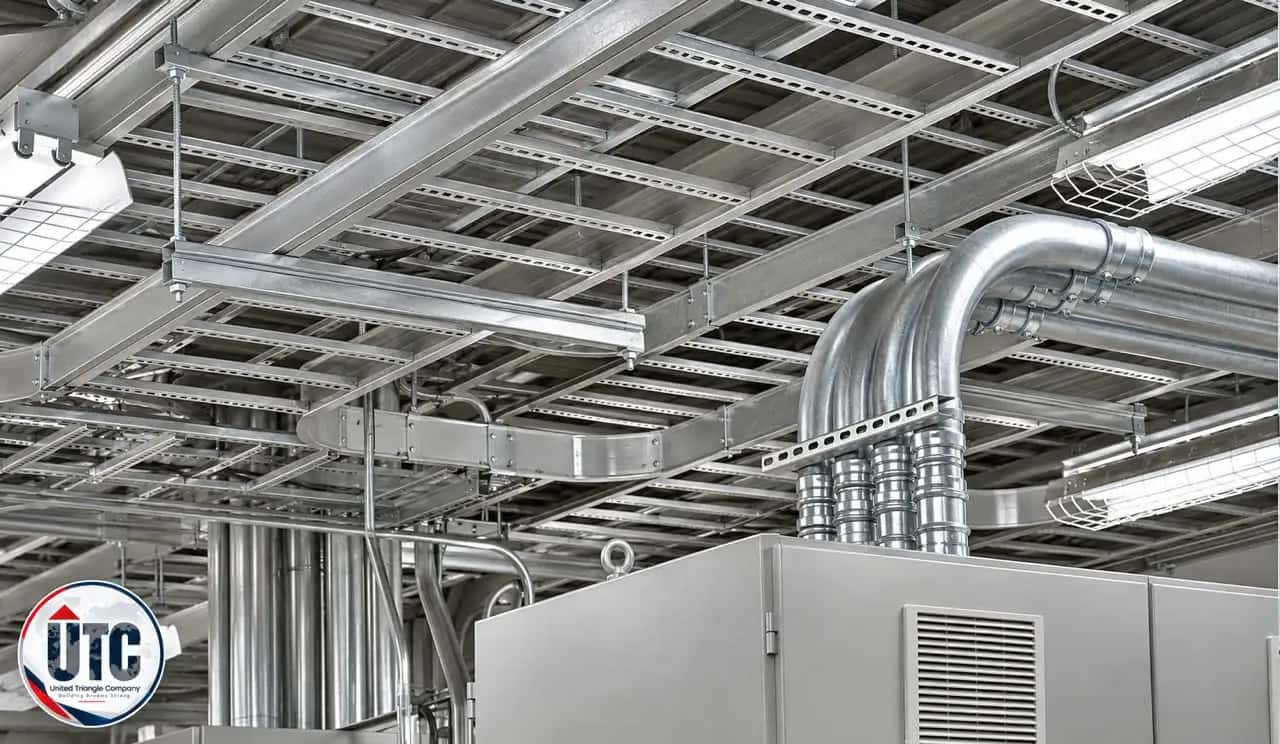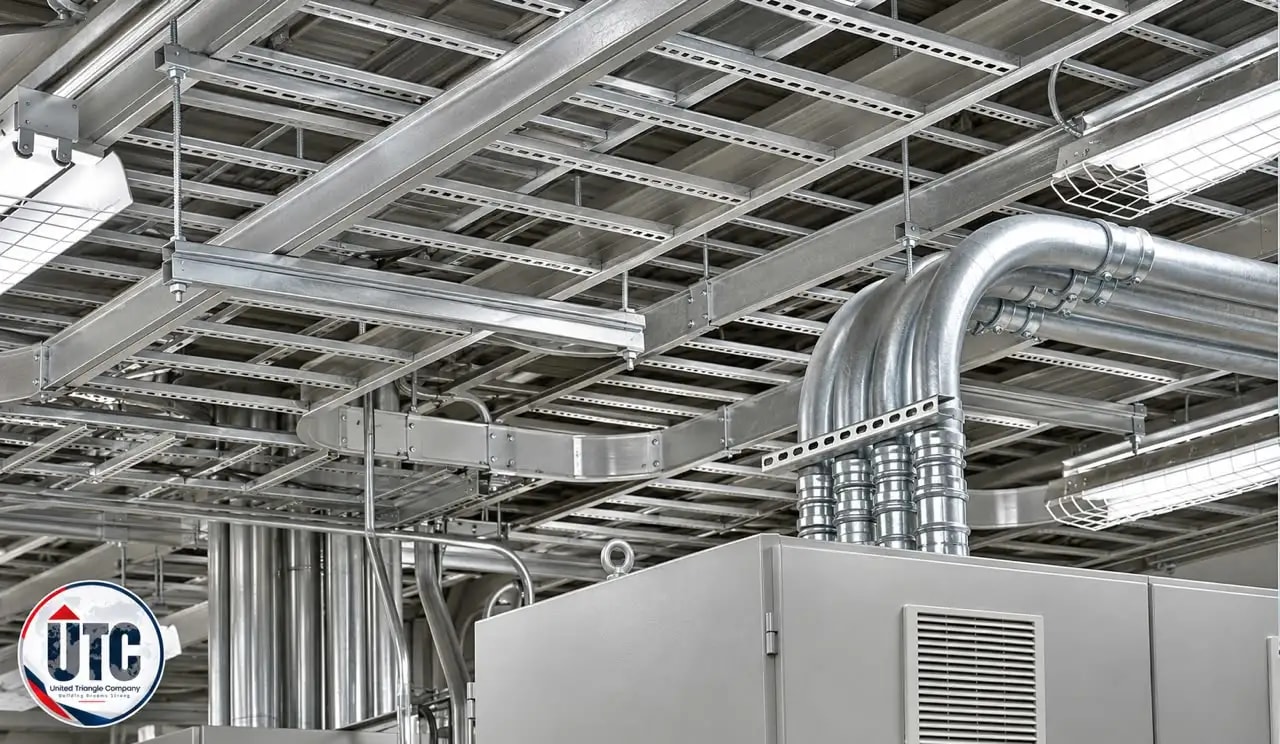

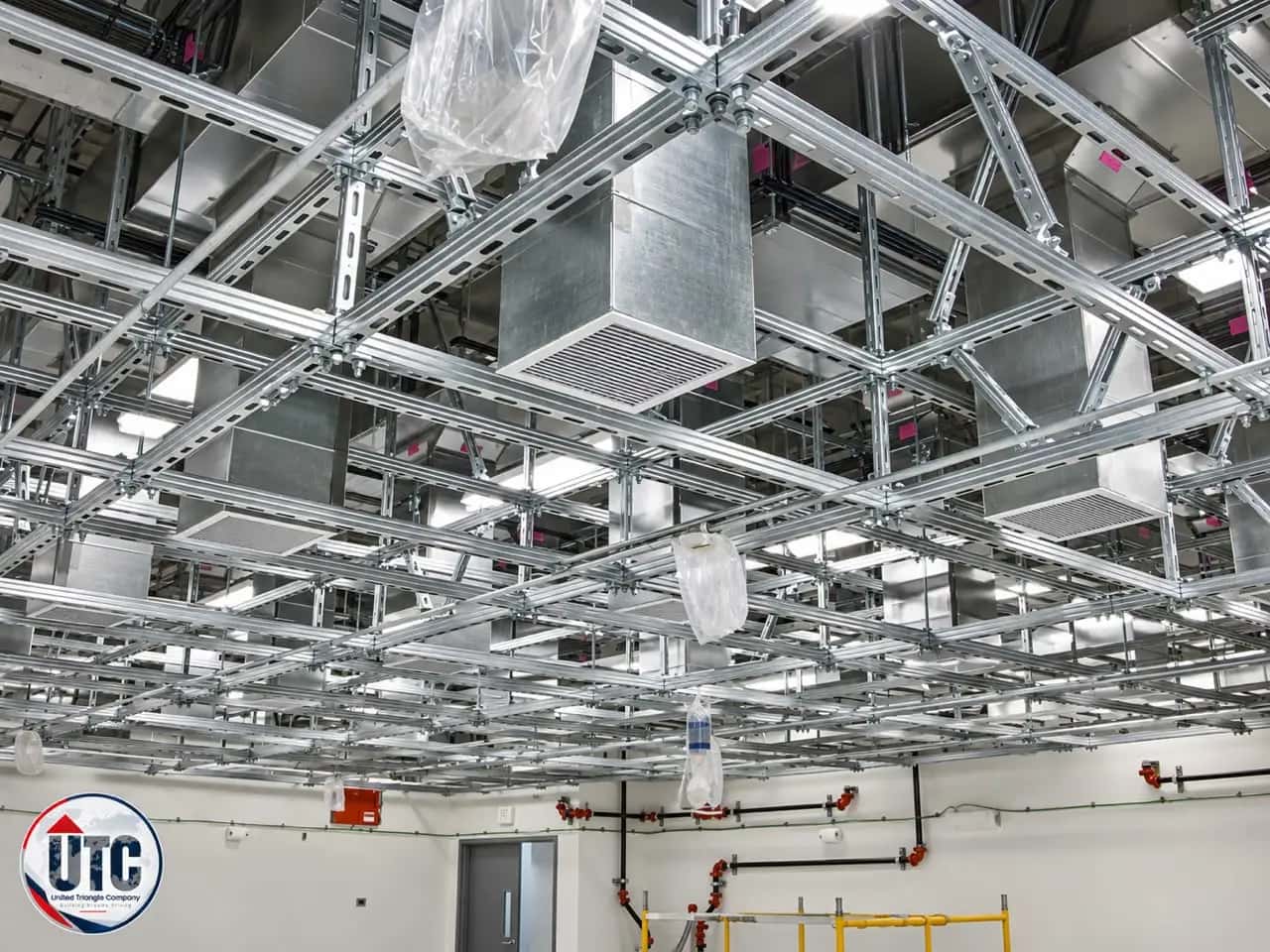
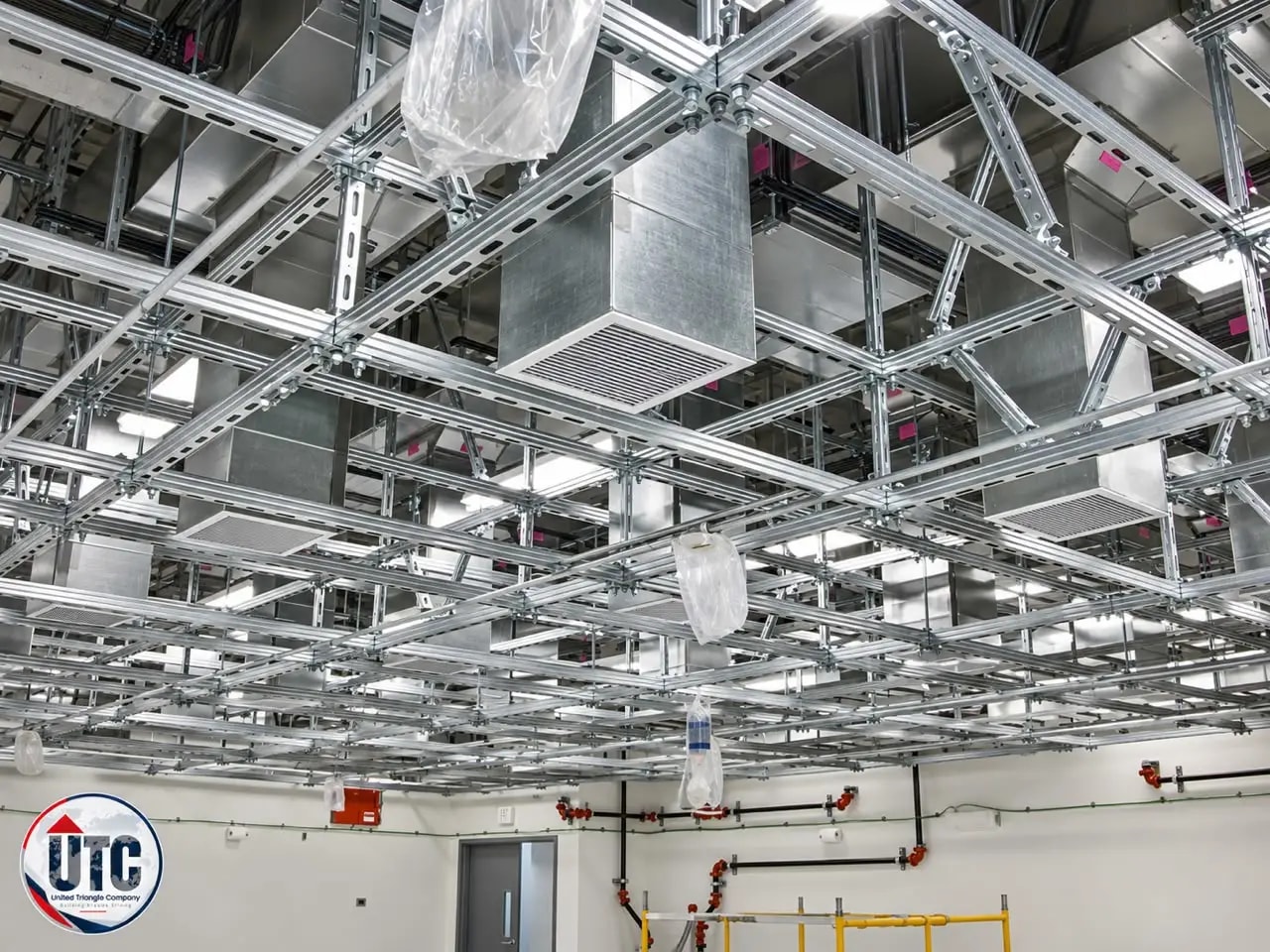
Strut channel is the steel framing that holds building services in place: the frames under pipework and ducts, the supports for cable trays, the cantilevers on walls. Many installers call it "unistrut" after one brand name, but it is a standard product — UTC makes its own strut channel and fittings in Riyadh to BS 6946, the British standard for metal channel cable support systems.
Why strut channel
- Flexibility — the same channels and fittings combine into an extensive range of structures.
- Rigidity — rigid frames assemble without drilling or welding.
- Adjustability — parts reposition easily, and frames can be taken apart and reused.
- Cost — a high strength-to-weight ratio and quick assembly make it a cost-effective support system.
Channel profiles and sizes
UTC strut channel comes in two profiles, 41 × 41 mm and 41 × 21 mm, each made as:
- Plain channel, with no holes;
- Slotted channel, which takes a bolt anywhere along its length;
- Back-to-back channel — two channels joined back to back for a stronger section;
- Concrete insert channel, cast into concrete to leave a ready fixing line.
Thicknesses are 1.5, 2.0 and 2.5 mm, and channels come in 3 m or 6 m lengths.
Fittings and accessories
- Plates and angles — square washers, double-hole plates, three-hole corner plates, two- and four-hole corner angles and eight-hole wing connections.
- Brackets and connectors — universal brackets, U clamps, internal and external U connectors, channel hangers and floor brackets.
- Beam clamps — standard, Z and C types, for fixing to steel beams.
- Cantilever arms and base posts — for wall- and floor-mounted supports.
- Fasteners — channel nuts with or without springs, hexagonal, carriage and roofing bolts, machine screws, nuts, flat washers, U bolts and threaded rod.
Standard plates are 6 mm thick, floor brackets 2 mm, channel hangers 2.5 mm and beam clamps 6 or 8 mm. Cantilevers are 2 mm steel by default and base posts 6 mm.
Load capacity
UTC's catalogue gives these recommended maximum fastener pull-out loads:
| Bolt size | Recommended maximum load |
|---|---|
| M12 | 16 kN |
| M10 | 11 kN |
| M8 | 7 kN |
| M6 | 3.6 kN |
They apply to grade 4.6 set bolts with strut channel nuts; M12 bolts are torque-tightened to 40 N·m. Load calculation reports are available on request.
Finishes
Hot-dip galvanized for outdoor and industrial areas, pre-galvanized for dry indoor areas, powder coated in any RAL colour, PVC coated, or stainless steel for corrosive and hygienic environments. Our guide to choosing the right finish explains each one.
Strut with cable trays and ladders
Strut frames and cantilevers support cable trays and cable ladders on many projects. Ordering the supports with the trays from one manufacturer keeps sizes and finishes matched along the route.
See every part and code on the strut channel page, or send your drawings for a quotation.
Planning a project?
Send us your requirements — we’ll recommend the system and quote.