
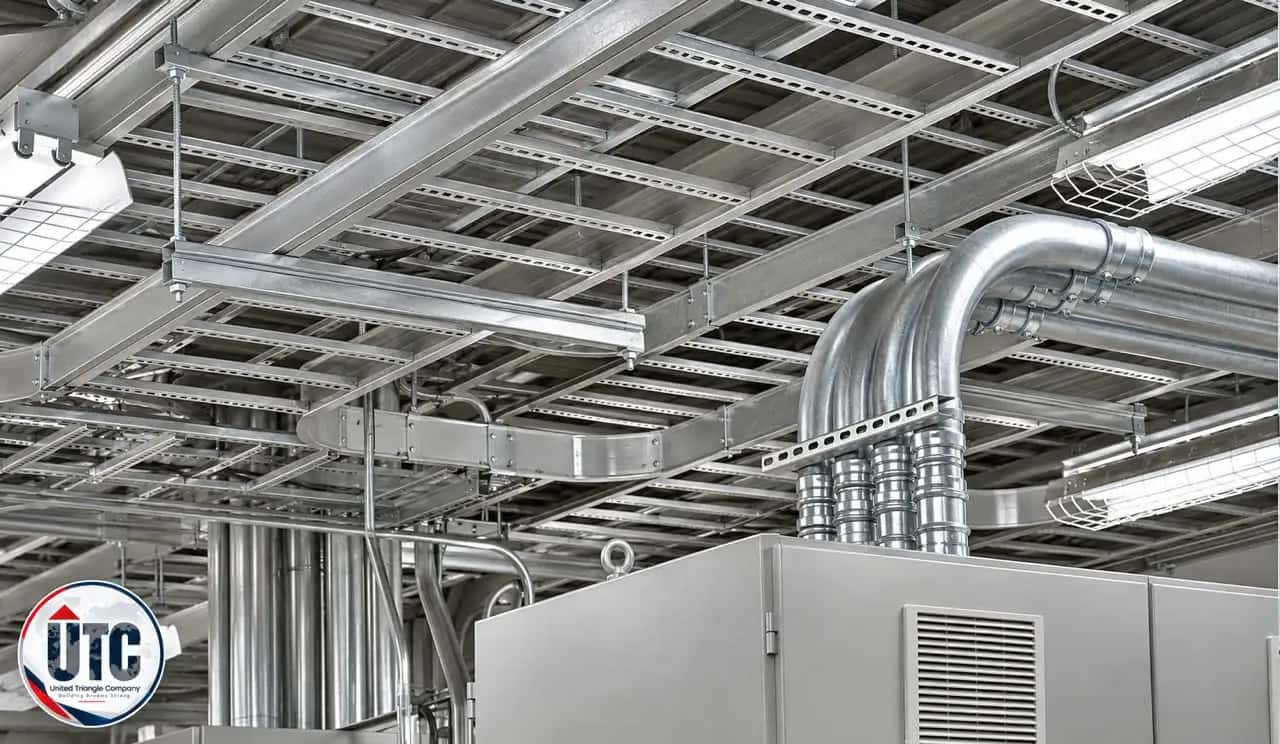
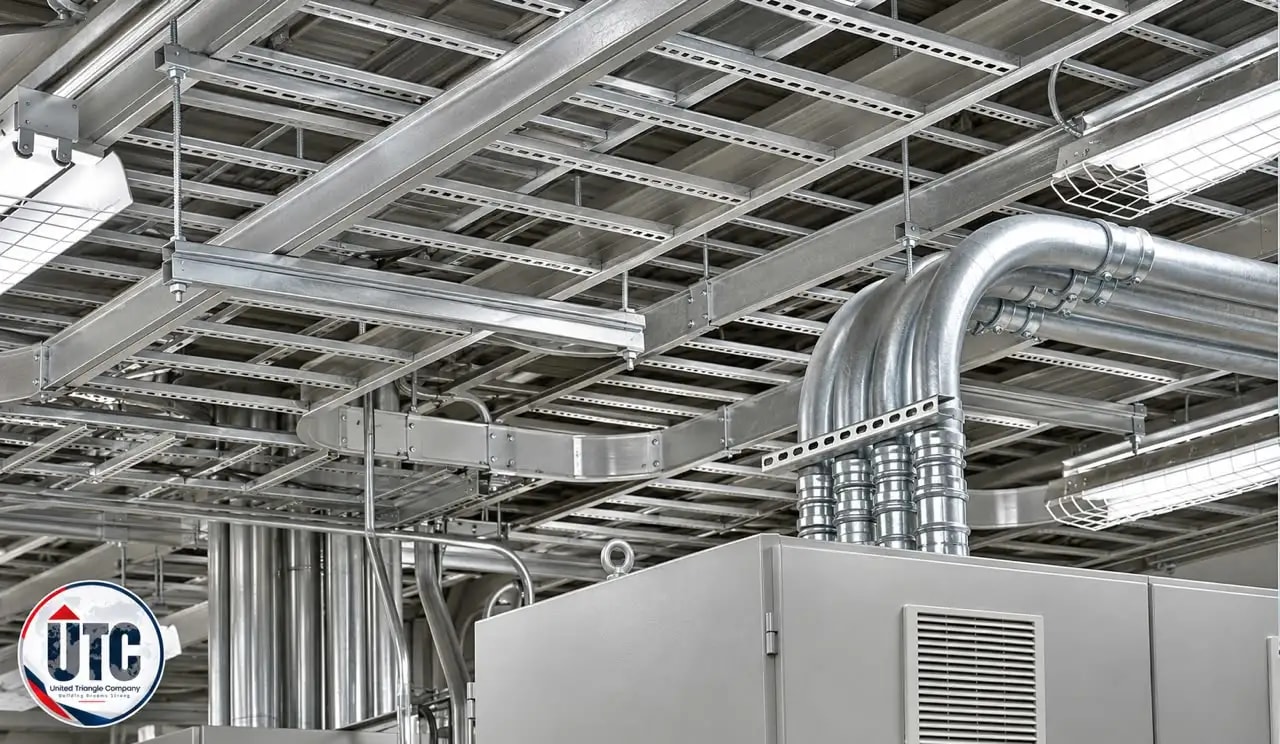
"Cable tray" is often used for any metal system that carries cables, but there are five distinct types, each built for different loads, cables and conditions. Choosing the right one — or the right mix — is the first decision in a cable management design.
1. Perforated cable tray
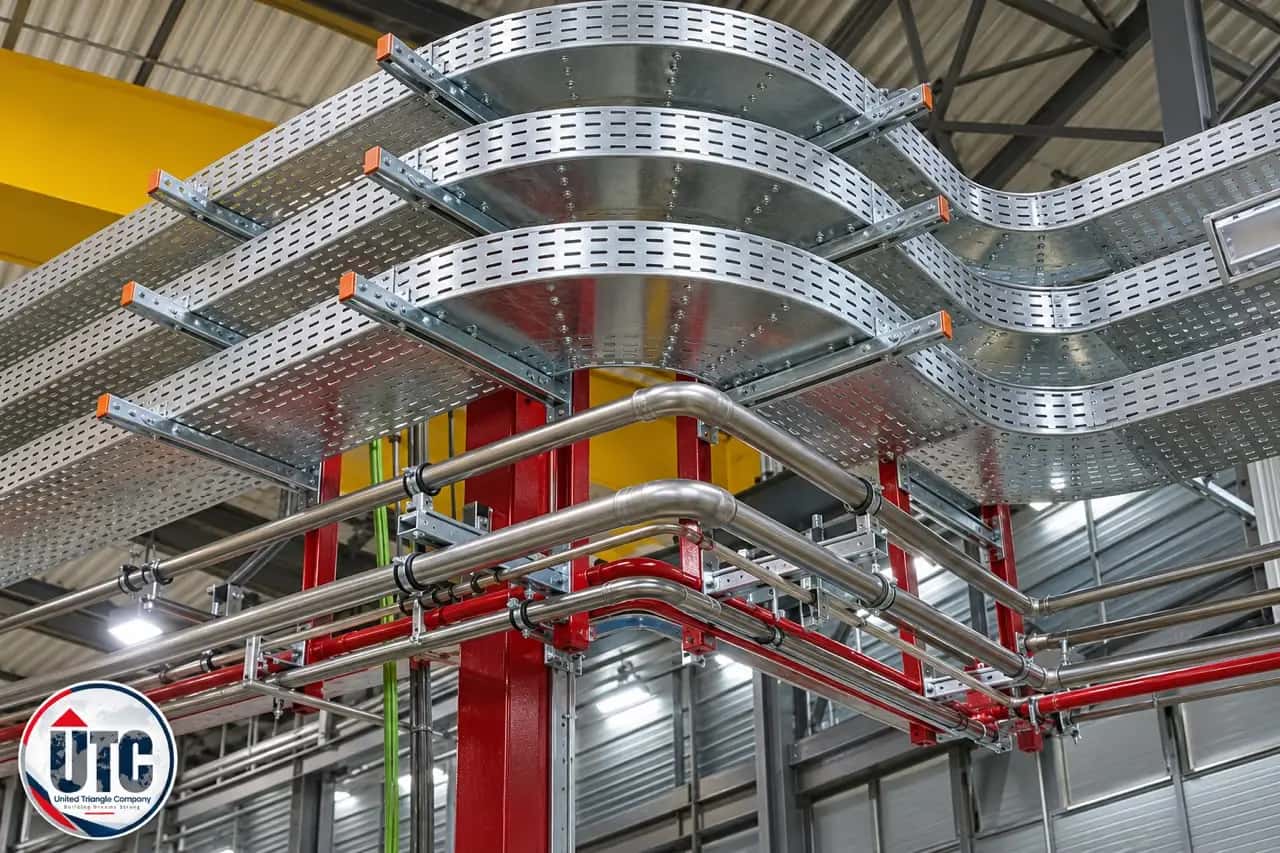
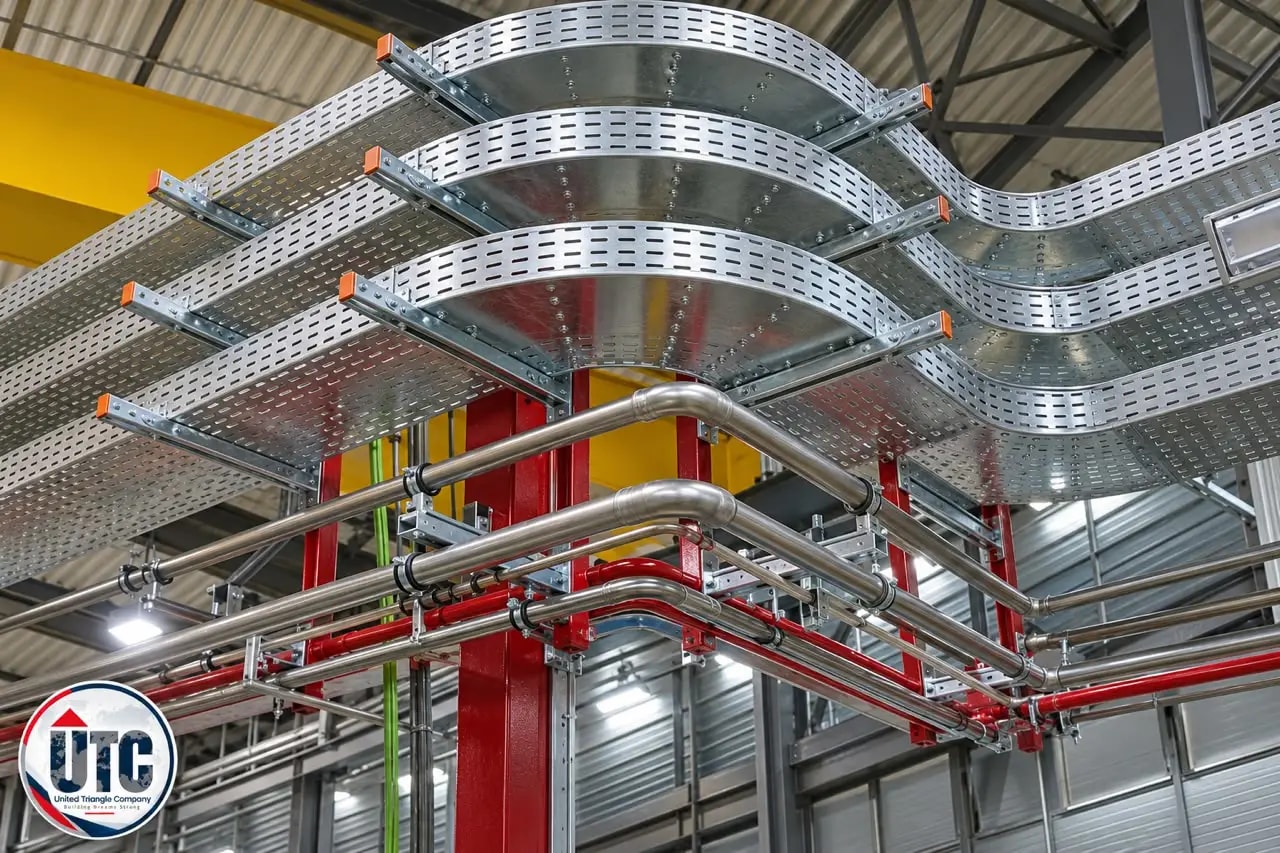
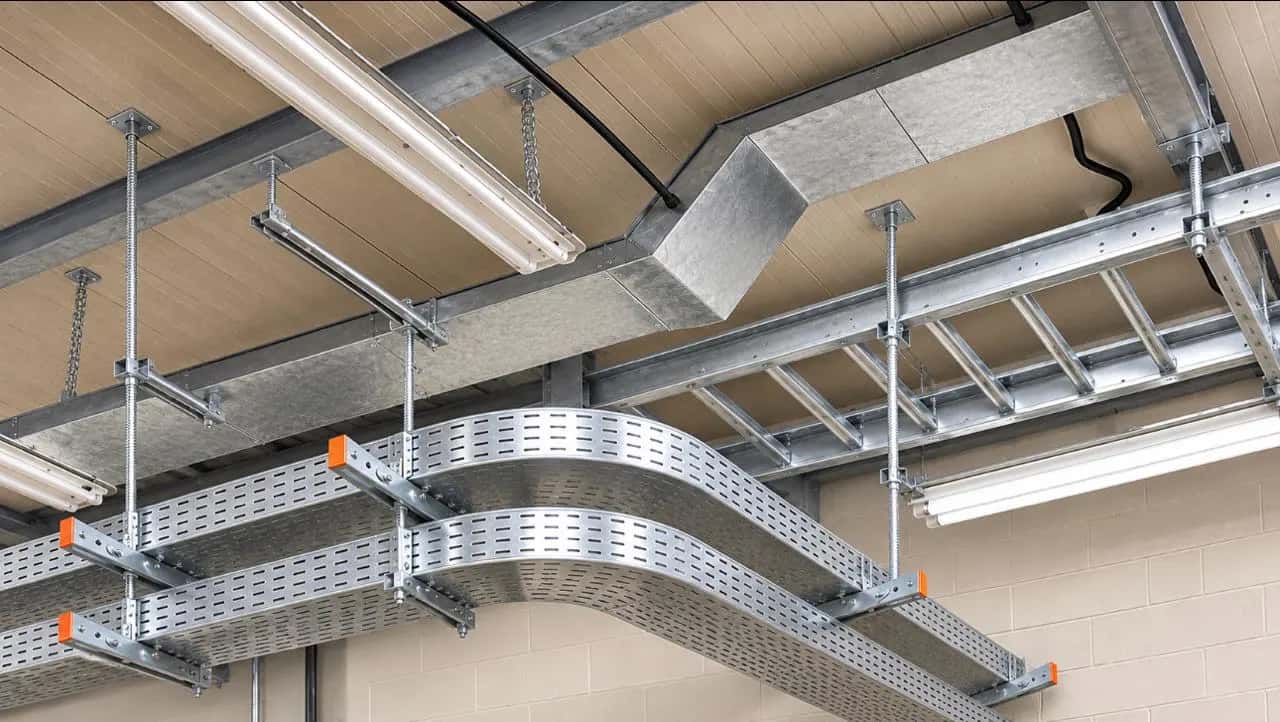
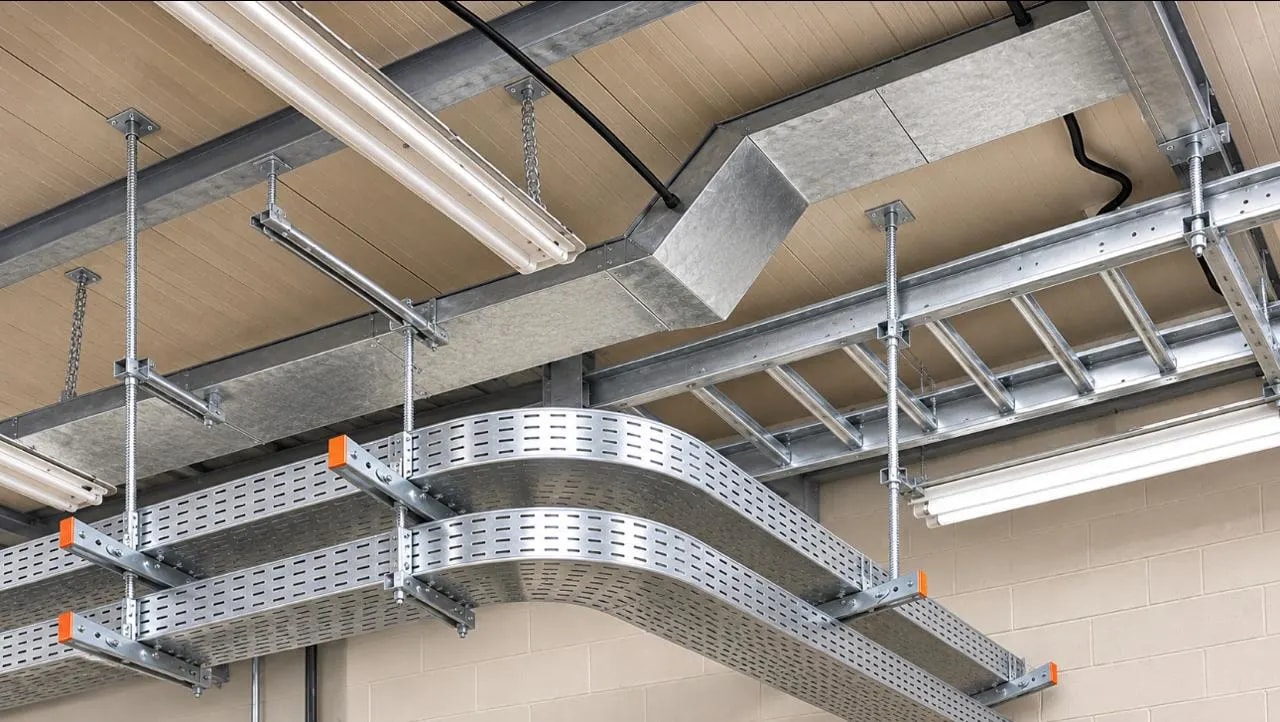
A one-piece channel formed from sheet steel, perforated on the bottom and sides for maximum ventilation. It is the most common way to support and route cables.
- UTC sizes: 50 – 900 mm wide, 25 – 100 mm side height, 1.0 – 2.0 mm thick, with an inside (RFI) or outside (RFO) return flange.
- Standards: BS EN 61537, NEMA VE-1 / VE-2.
Cable tray: sizes, finishes and fittings →
2. Cable ladder
Two side members joined by rungs — swaged round tubes or welded channels. It is made for heavy loads and large numbers of cables, resisting bending and deflection while leaving cables open to the air.
- UTC sizes: 100 – 1000 mm wide, 100 – 150 mm high, rungs every 300 mm (or 150 / 250 mm).
- Standards: BS EN 61537, NEMA VE-1 / VE-2.
Cable ladder: sizes, finishes and fittings →
3. Cable trunking
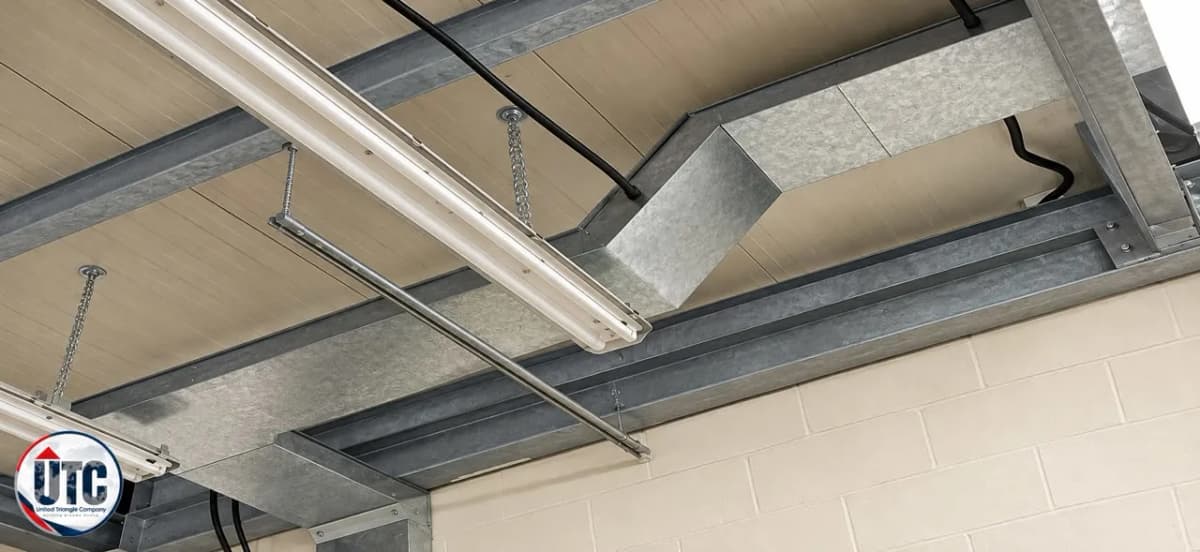
A sealed raceway with a solid bottom, sides and cover that encloses the cables completely — in one to four compartments to keep circuits apart. Fittings are one piece, with no welding, and connect without separate parts.
- UTC sizes: 50 – 300 mm, 1.0 – 2.0 mm thick, with butterfly, screw-fix, snap-on or weatherproof covers.
- Standard: BS EN 50085.
Cable trunking: sizes, covers and fittings →
4. Wire basket (wire mesh) tray
Welded steel wire on a 50 × 100 mm grid — light, strong and fast to route, for power cables and sensitive data lines alike.
- UTC grid and duty: 50 × 100 mm, heavy duty (WB-HD).
- Standards: BS EN 61537, NEMA VE-1 / VE-2.
5. Strut channel (metal framing)
Slotted steel channel — often called "unistrut" — with plates, brackets, beam clamps and channel nuts that bolt into supports without drilling or welding. Strut frames, cantilevers and base posts carry the trays, ladders, pipes and ducts.
- UTC profiles: 41 × 41 and 41 × 21 mm, plain, slotted, back-to-back or concrete insert, 1.5 – 2.5 mm thick.
- Standard: BS 6946.
At a glance
| Type | Built as | Typical use |
|---|---|---|
| Perforated cable tray | One-piece perforated channel | Most cable runs, with covers where needed |
| Cable ladder | Side members and rungs | Heavy loads and many cables |
| Cable trunking | Enclosed raceway with a cover | Protected, segregated circuits |
| Wire basket | Welded wire mesh | Data and power, fast routing |
| Strut channel | Slotted steel channel | Supports and frames for all of the above |
Most projects use several: ladders on the main routes, trays on the branches, trunking where cables must be enclosed, wire basket for data, and strut to hold it all. UTC makes all five in its factory in Riyadh — see the full product range, cable tray sizes, or request a quotation.
Planning a project?
Send us your requirements — we’ll recommend the system and quote.