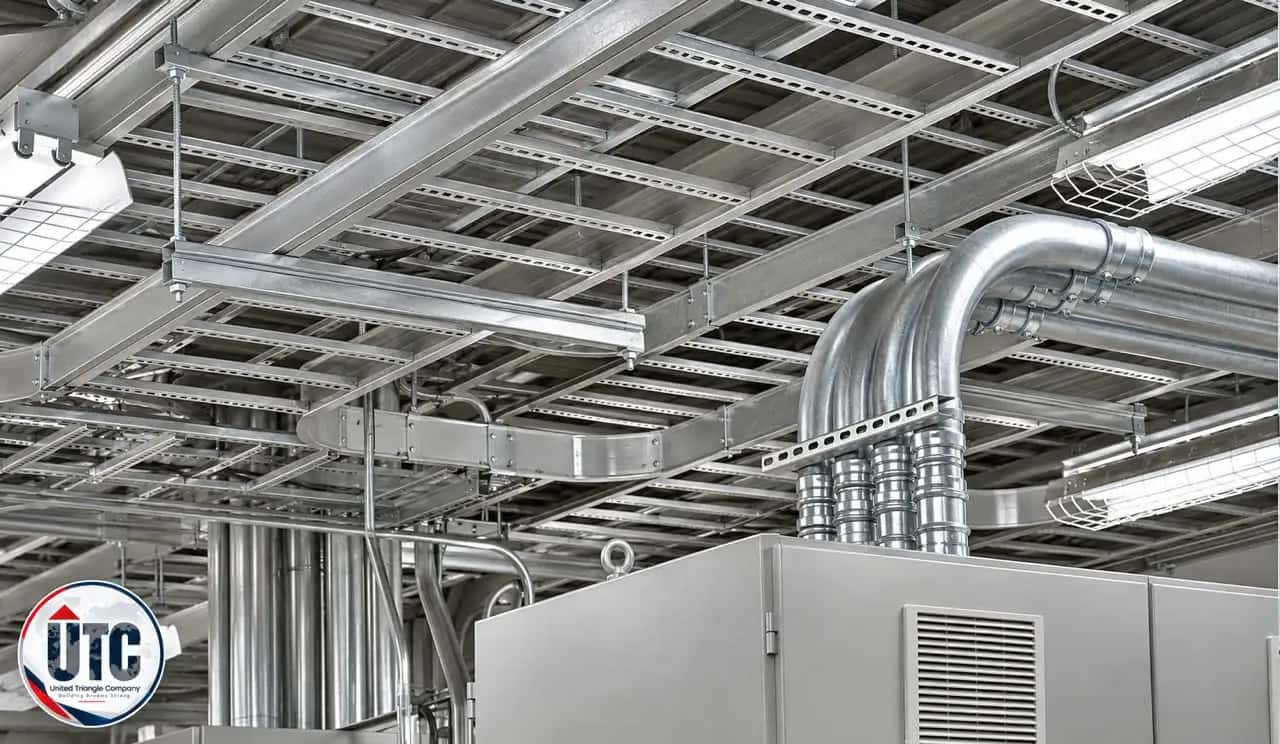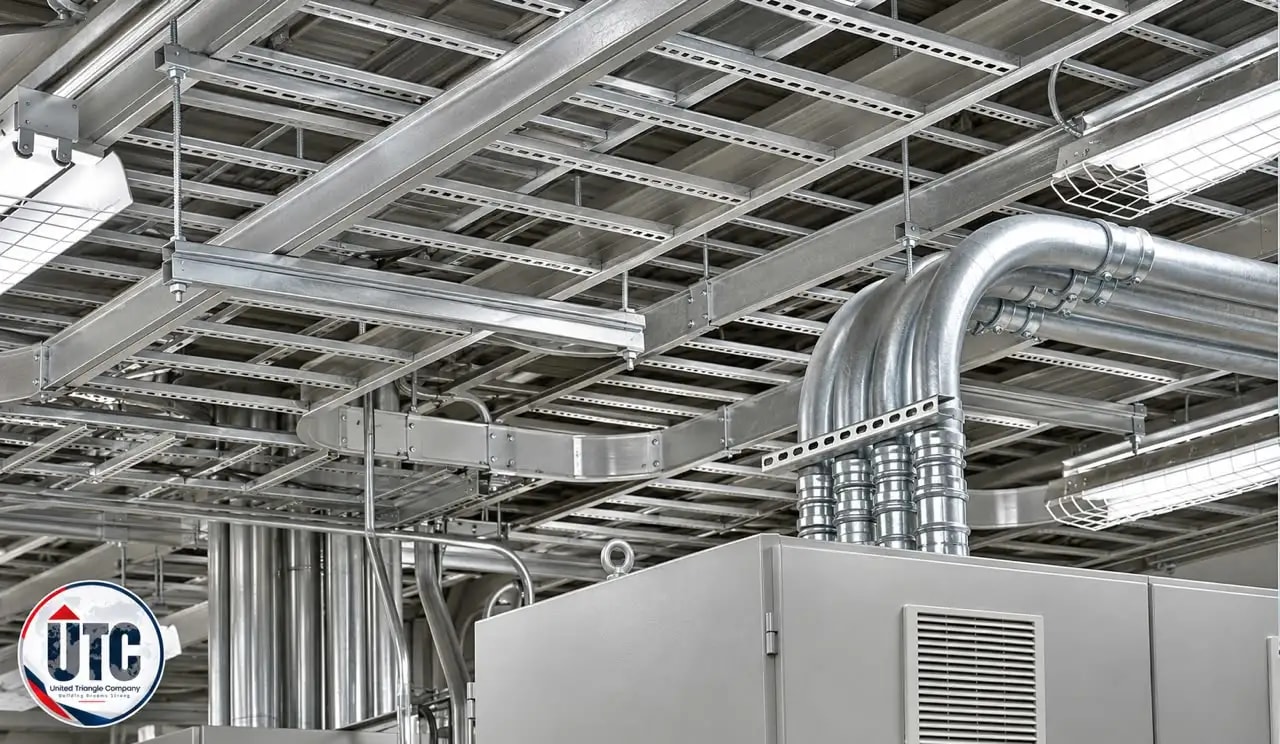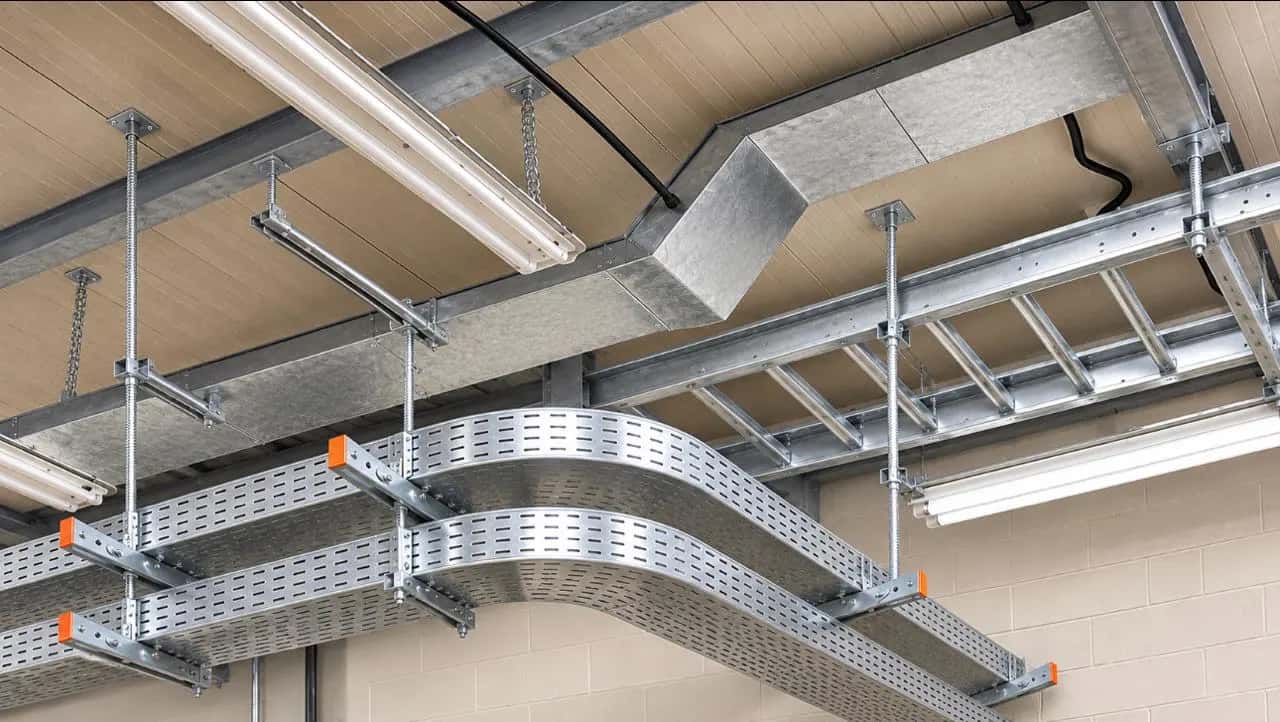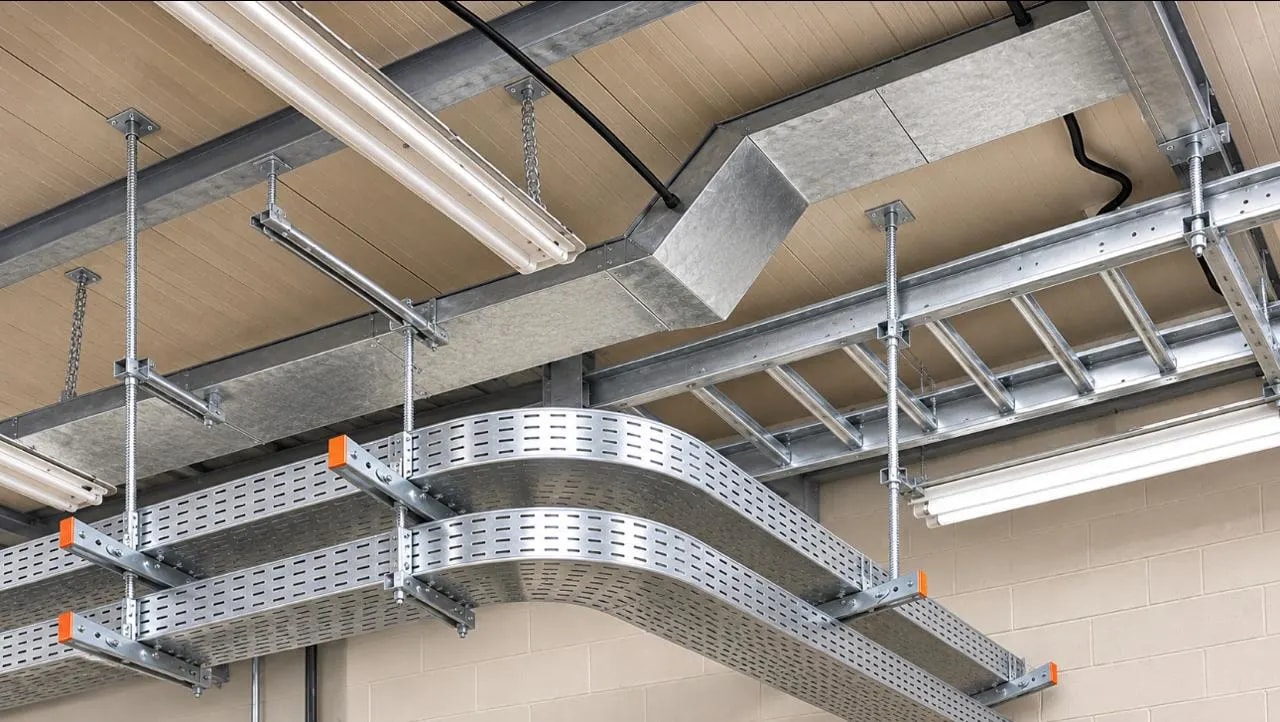

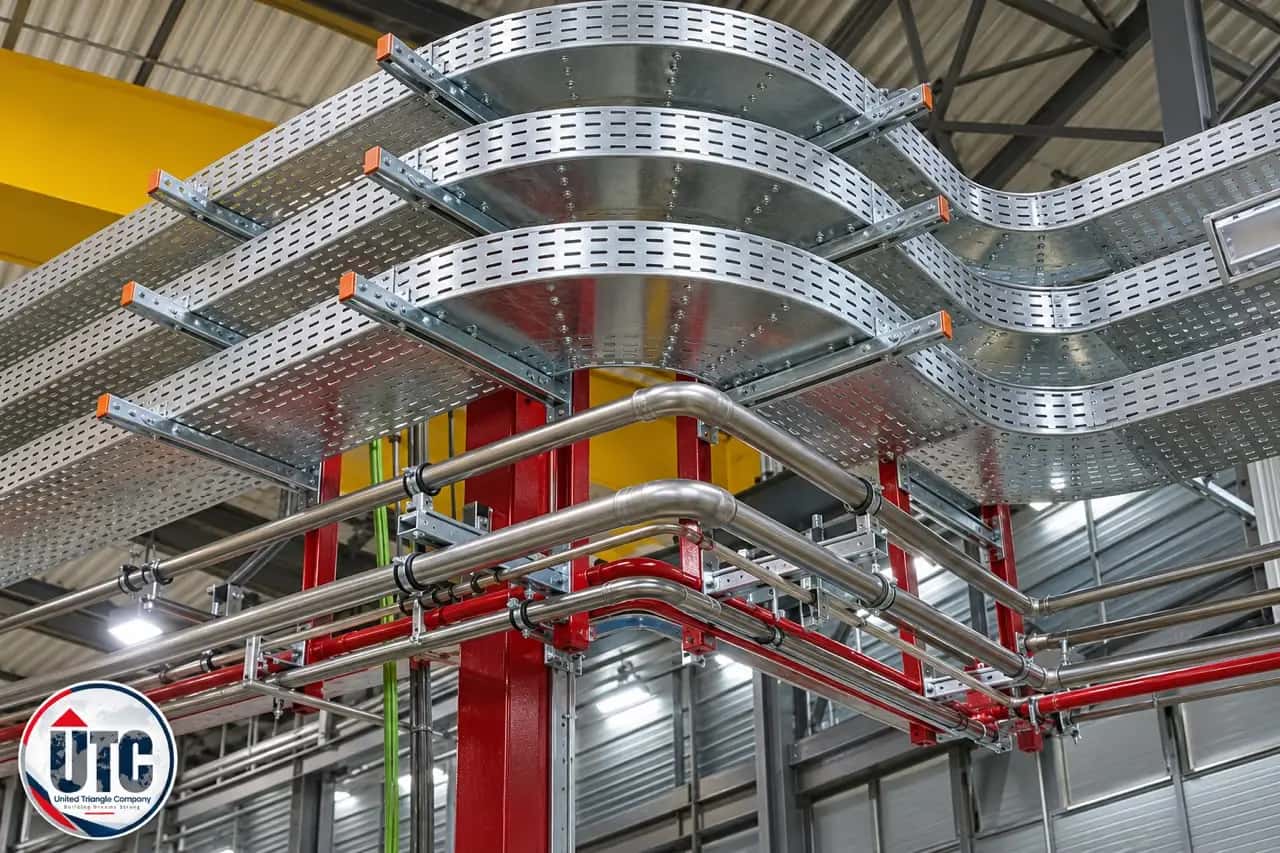
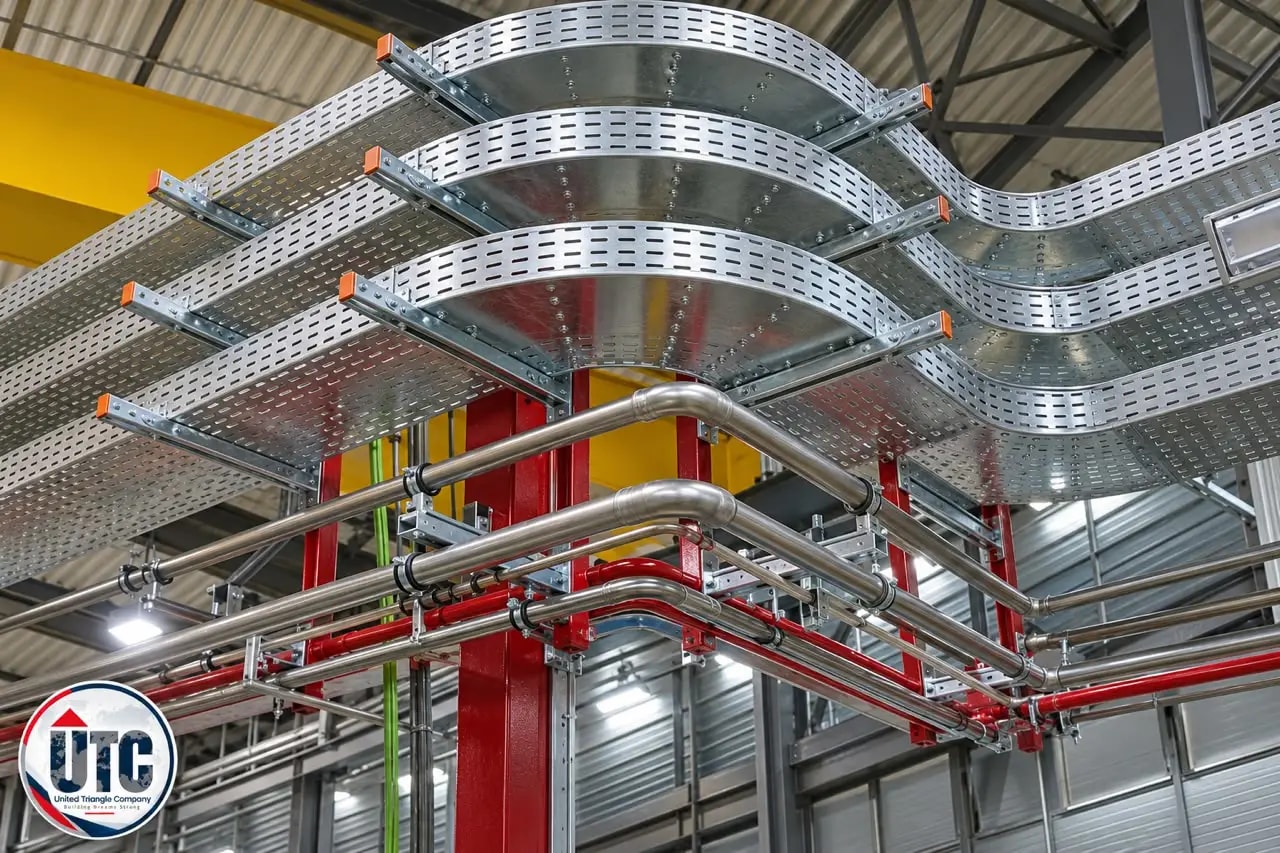
A cable tray size is written as three numbers — width, side height and thickness — plus a length. Get them right and the route carries today's cables with room to spare; get them wrong and the tray overfills, sags or costs more than it needs to. Here is what each dimension means, and the sizes UTC manufactures in Riyadh.
The four dimensions
- Width (W) — the inside width the cables lie across. It sets how many cables fit side by side.
- Side height (H) — the height of the side walls. Taller sides hold more layers of cable and stiffen the section.
- Thickness (THK) — the steel thickness. Thicker steel carries more load.
- Length — one straight section. UTC trays and ladders come in 3.0 m or 2.44 m lengths.
An order code lists them in that order. CTRFO/600/50/2.0/HDG, for example, is an outside-return-flange cable tray, 600 mm wide, 50 mm side height, 2.0 mm thick, hot-dip galvanized.
Cable tray sizes
UTC perforated cable trays come in three duties:
| Duty | Side height (mm) | Width (mm) | Thickness (mm) |
|---|---|---|---|
| Medium duty (MD) | 25–30 | 50–150 | 1.0 |
| Medium duty (MD) | 25–30 | 200–300 | 1.2 |
| Medium duty (MD) | 25–30 | 350–600 | 1.5 |
| Heavy duty (HD) | 50–75 | 100–300 | 1.5 |
| Heavy duty (HD) | 50–75 | 350–900 | 2.0 |
| Extra heavy duty (XHD) | 100 | 100–300 | 1.5 |
| Extra heavy duty (XHD) | 100 | 350–900 | 2.0 |
Widths, side heights and thicknesses outside these ranges are made on request.
Cable ladder sizes
For heavy loads, cable ladders are deeper and wider:
| Duty | Outside height (mm) | Width (mm) | Thickness (mm) |
|---|---|---|---|
| Medium duty (MD) | 100 | 100–600 | 1.5 |
| Medium duty (MD) | 100 | 750–1000 | 2.0 |
| Heavy duty (HD) | 125 | 100–1000 | 2.0 |
| Extra heavy duty (XHD) | 150 | 100–1000 | 2.0 |
Rungs are spaced 300 mm apart as standard, or 150 or 250 mm where required.
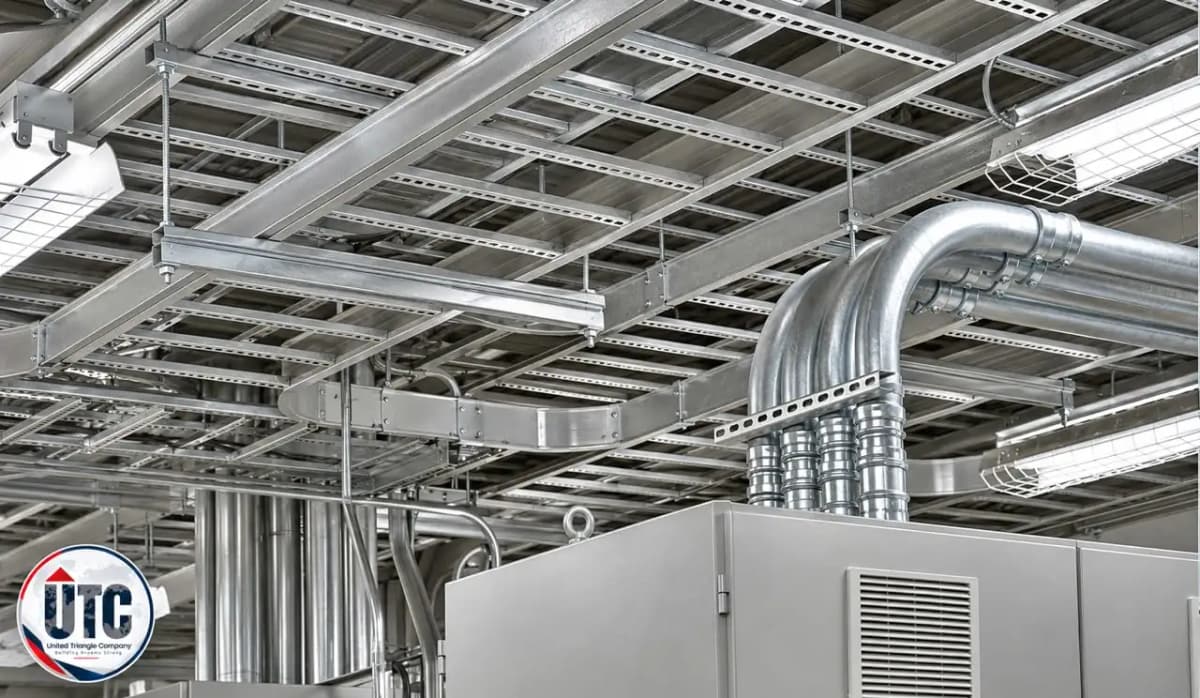
Cable trunking sizes
Cable trunking comes in widths and side heights of 50, 100, 150, 200 and 300 mm, in 1.0, 1.2, 1.5 and 2.0 mm steel, with one to four compartments to keep circuits apart.
Wire basket and strut channel
Wire basket trays are made on a standard 50 × 100 mm wire grid in heavy duty (WB-HD). Strut channel comes in 41 × 41 and 41 × 21 mm profiles, 1.5, 2.0 or 2.5 mm thick, in 3 m or 6 m lengths — see the strut channel guide.
How to choose the size
- Start from the cable schedule. The cables sharing the route set the width, and the number of layers sets the side height.
- Leave room to grow. Size for the cables planned later too — adding capacity to an installed route is much harder than sizing for it now.
- Check the load. Heavy power cables call for a heavier duty, a thicker section — or a cable ladder.
- Match the fittings. Elbows, tees, risers and reducers must come in the same width and height as the straight run.
- Follow the specification. The project's standard — BS EN 61537 or NEMA VE-1 / VE-2 for trays and ladders, BS EN 50085 for trunking — and the consultant's requirements come first.
Send us the cable schedule and the route — our engineers will recommend the system, width, side height and thickness, and quote the fittings with it. Request a quotation or download the catalogue for every size and part code.
Planning a project?
Send us your requirements — we’ll recommend the system and quote.